
How to Compare Logistics Providers Using True Cost per Shipment
Apply each 3PL rate card to the same operating data, then rank providers on true cost per shipment—not the headline pick fee.
Long-form pieces on freight cost, carriers, accessorials, dimensional weight, parcel and LTL shipping, TMS and data, KPIs, and practical AI in transportation—written for shippers, 3PLs, and operations leaders who need ideas they can map to their role and their network. Field-tested, plain language, substance over sales language—the same focus as the rest of this site.
Not sure where to start? These clusters group articles by the problem you're trying to diagnose or solve — rather than by publication date.
When freight costs go up unexpectedly, use these articles to identify which component — accessorials, dimensional weight, or carrier mix — is driving it.
Choose partner type first, then normalize 3PL and contract logistics proposals onto the same operating data so you are not comparing rate-card labels.
Resources for reviewing a carrier agreement, identifying negotiation leverage, and scoring how well a contract reflects invoice reality.
Guides for identifying and understanding specific surcharges that appear on carrier invoices — what triggers each one and whether it's disputable.
Making the right call between courier and LTL for multi-piece shipments — before you get the first quote, not after.
Tool: Billable and Dimensional Weight Calculator →Not sure which cluster fits? Use the Start Here guide to navigate by your specific situation →
All articles
Apply each 3PL rate card to the same operating data, then rank providers on true cost per shipment—not the headline pick fee.

Overlength, detention, tarping, and the terms pallet shippers skip—map your last 20 heavy moves through the tariff before you sign.

Documents and photos carriers expect, how to note exceptions at delivery, timelines for notice and filing, and how to assemble a claim that holds up.

What packaging means on the freight invoice, why air in the box eats cost, how to right-size cartons, and how to run a packaging study that operations can keep.

Appointment vs notification on LTL invoices, who pays when the receiver requires a window, how fees stack with detention, and how to audit before you pay.

When free time starts, who gets billed when the customer dock runs late, how LTL differs from truckload, and how to audit detention on the freight invoice.

Decode distribution surcharge on parcel and freight invoices—delivery area, demand/peak, or DC handling—how it differs from residential and fuel, and how to audit or reduce it.

How NMFC density sets LTL freight class from 50 to 500, how to calculate pounds per cubic foot on a loaded pallet, and how wrong class becomes a reclass invoice—after the July 2025 reform.

How to compare parcel and LTL on the same shipment facts, find the cost tipping point, and weigh service and operational tradeoffs before you book.

What residential delivery fees cover on parcel and LTL invoices, how they differ from liftgate and limited access, and why this surcharge is often negotiable—or waiveable—in a carrier contract.

A shipper-side freight invoice audit checklist: the five records you need, line-by-line checks for duplicates, rates, fuel, accessorials, and reweigh/reclass, how to prioritize when volume is high, dispute workflow, and a tracker template.

Exactly which fields to collect in the shipment, invoice, and rate records — how to link invoices to shipments when the keys don't match, how to normalize carrier names and location types, and how to build exception flags with real thresholds.

Freight invoices feel expensive when nobody can explain the details behind them. Why centralizing shipment, invoice, rate, and accessorial data is the prerequisite for freight audit, cost control, carrier negotiation, and AI automation — with a practical four-week starting plan.

Every carrier, 3PL, and warehouse sends data differently. EDI and API explained in plain language — why most shippers cannot freely choose between them, and how to turn fragmented logistics data into something you can actually use.

The method of data transfer is not the issue. How to define what you need for carrier performance management, shipment visibility, and operational decisions — and what to ask your 3PL to actually deliver.

Carrier, broker, 3PL, 4PL, or consultant? The right logistics partner depends entirely on the problem you're trying to solve — not on price or company size. A practical guide with a partner comparison table, questions to ask before signing, warning signs, and a case study.

Why a single invoice can be 30% higher than the last one — 10 causes of sudden freight cost spikes, how multiple triggers land in the same billing cycle, an 8-point early warning checklist, and how shock differs from gradual cost creep.

Freight cost creep explained — 11 sources from rate increases to operational drift, how small changes compound into a 13% total increase, a consolidation example, and a diagnostic checklist to find where cost is creeping in your network.

Two invoice adjustments that catch most shippers off guard — what reweigh and reclass mean, why they happen, how to dispute them, and how to prevent them with accurate weight, dimensions, and NMFC classification.

Amazon Supply Chain Services now covers fulfillment and last-mile delivery for businesses outside the marketplace. What it includes, where it competes with traditional carriers, and how to evaluate it before a carrier review.

Why freight margin erosion rarely announces itself — and the five places small decisions compound into real gross margin impact across high shipment volumes.

Five signals that freight leakage is present in your network — and a four-step invoice workflow that any operator can run with a spreadsheet and 90 days of carrier data.

Rate analysis shows how an agreement prices your freight; optimization decides which levers—DIM, minimums, accessorials—to change. Contract rules plus shipment history, simulation, and negotiation points for your mix.

Billable weight is the greater of actual scale weight and dimensional weight in most parcel shipping. Definitions, plain examples, calculation steps, and a free calculator.

When courier wins, when freight wins, and what to verify before you book—without drowning in tariff detail.

Six-step accessorial audit checklist: match invoice lines to tender data and tariffs, decide pay vs dispute, and stop repeat fees—parcel and LTL.

When LTL carriers classify a stop as limited access—and how site reality differs from “commercial” on an address label.

Ground-level delivery without a dock: what the LTL liftgate accessorial pays for and how to quote it before tender.
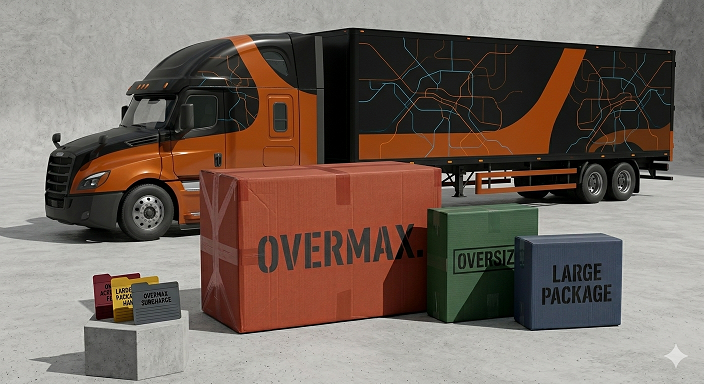
How parcel size surcharge categories differ—and why billable weight and tiered fees answer different questions on the same shipment.

When parcel networks charge for manual handling off the standard path—and what packaging changes actually move the needle.

Why carriers apply overmax-style parcel rules, how they differ from large-package tiers, and how tender accuracy reduces billing disputes.

Hub guide to accessorial fees—parcel and LTL triggers, comparison table, and links to deep dives on overmax, handling, liftgate, limited access, and invoice audit.
No articles match your search. Try different keywords or .